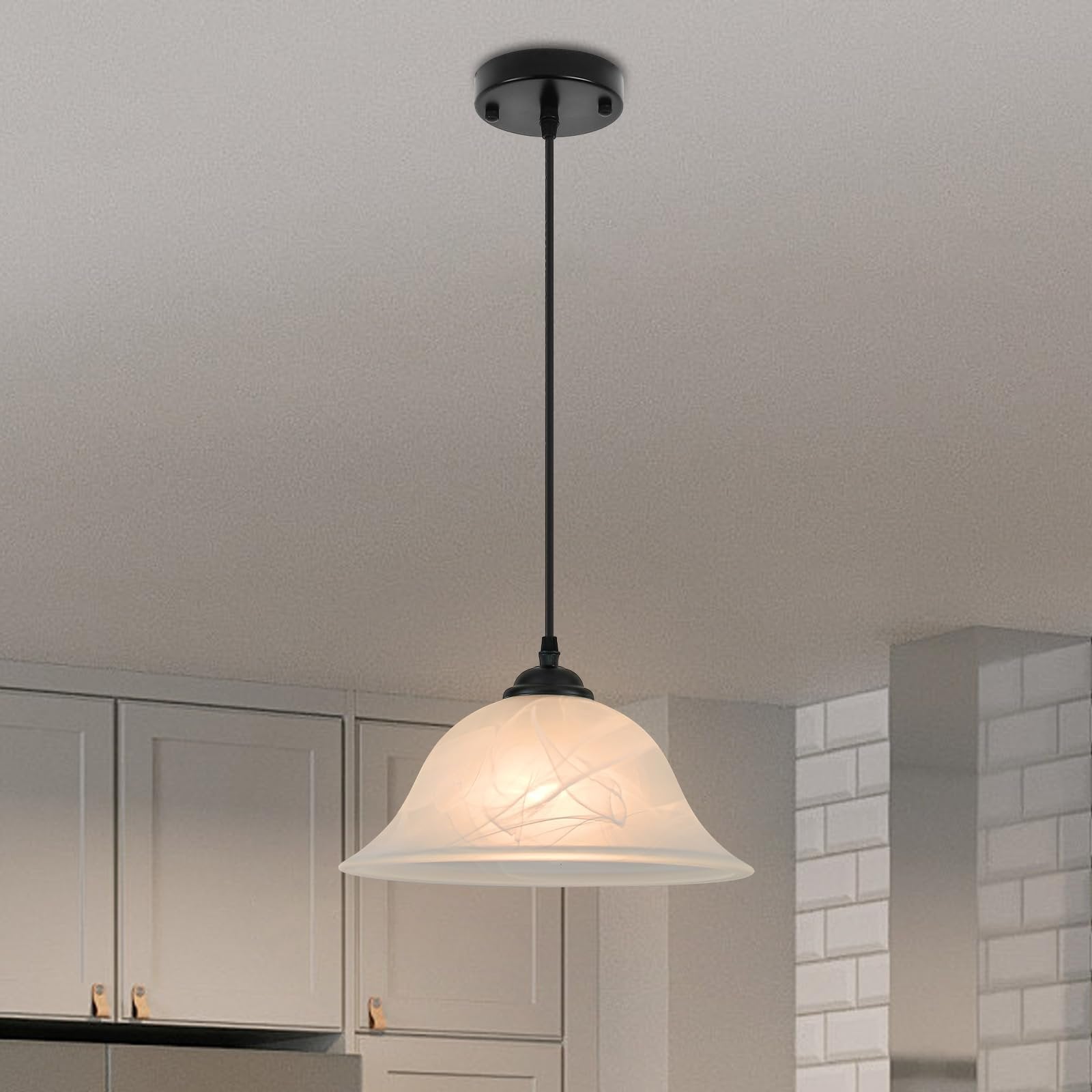
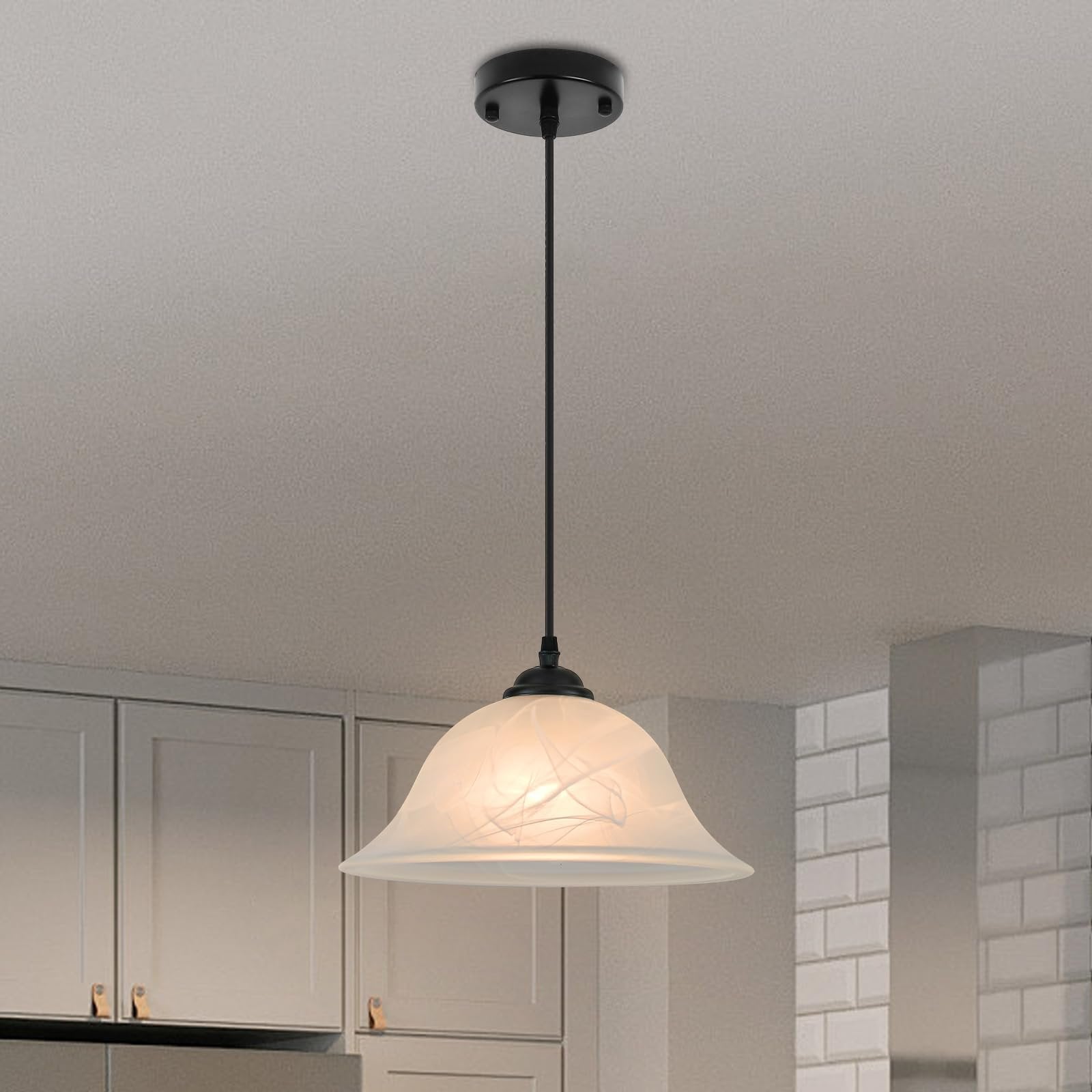
Pendant lighting can make a kitchen sink feel like a planned part of the room, but the sink area has different constraints from a kitchen island. Before choosing a shade, check the sink's position, nearby windows and cabinets, standing clearance, and—most importantly—the fixture's approved location rating and installation requirements.
1. Start with the sink layout
Measure the sink opening and the surrounding counter, then note the centerline of the faucet, any window, and the bottom edges of nearby cabinets or shelves. A pendant should look centered in relation to the sink and feel comfortable to use—not collide visually with the faucet, block a view, or sit where a cabinet door or window needs to move.
A single pendant may suit a compact, centered sink, while a wide or double-bowl sink may need a different arrangement. Treat that as a design starting point, not a rule: the sink width, ceiling height, available electrical point, and surrounding task lighting all affect the best layout.
2. Choose shade size by scale, not appearance alone
Compare the shade diameter with the sink and counter width. A very small shade can disappear against a broad counter; an oversized shade can crowd a narrow sink area or a window. Check both the shade's listed dimensions and the fixture's total installed height or drop. Those measurements are not interchangeable.
For example, the Black Farmhouse Alabaster Glass Pendant Light, listed at 11.8 inches, can help you compare the visual scale of a single-shade design. The listed shade size alone does not tell you the full hanging height or whether a particular installation location is suitable.
3. Protect sightlines and everyday clearance
Think about the view from the kitchen, the height of the people using the sink, and whether the pendant would sit in front of a window. Also account for the faucet arc, upper cabinets, and the distance between the fixture and the work surface. There is no one hanging height that works for every sink, so use the exact fixture's installation instructions and have the placement checked against applicable electrical requirements.
For a broader overview of pendant placement, see our guide to pendant hanging height; a sink installation still needs its own clearance and moisture checks.
4. Verify the location rating before buying
This is the most important step. Kitchens can have steam, splashes, and frequent cleaning, but not every decorative pendant is approved for every location near water. Do not assume that a fixture is damp-rated or wet-rated just because it is marketed for a kitchen.
- Look for the manufacturer's stated damp- or wet-location rating, where applicable to your exact installation.
- Confirm the installation method, electrical requirements, and any clearance instructions in the product documentation.
- If the rating or installation details are missing, ask the seller or manufacturer before ordering; consult a licensed electrician when needed.
- Follow local electrical code. Do not install a fixture over a sink based on appearance alone.
5. Choose glass and finishes that work with the room
Glass changes the look of a pendant and how visually prominent it feels. Frosted or milk-style glass gives a softer appearance; clear glass makes the bulb more visible; patterned glass adds decorative detail. Black, gold, chrome, and brushed-metal finishes can coordinate with cabinet hardware or faucets, but they do not need to match every metal in the room.
Because sink-area fixtures may need more frequent wiping, consider whether the shade is easy to reach and clean according to the manufacturer's care instructions. Our glass pendant comparison guide explains the main visual differences.
6. Compare styles—but confirm each product's specifications
If you are comparing finishes and silhouettes, start with these SaiPIS options:
- Black Farmhouse Alabaster Glass Pendant Light, 11.8 Inch — a black-finish, alabaster-style glass look.
- Gold Blown Glass Pendant Light — a warmer gold-and-glass style.
- Browse featured pendant lights to compare other silhouettes and finishes.
These links are style examples, not a claim that every listed fixture is approved for installation above a sink. Check the exact product page and manufacturer information for location rating, dimensions, suspension range, bulb requirements, dimming compatibility, and installation method before choosing a fixture for this area.
Kitchen sink pendant checklist
- Measure the sink, counter, ceiling, and nearby cabinets or window.
- Check sightlines, faucet clearance, and how the space is used.
- Confirm the fixture's location rating and installation instructions.
- Verify the full hanging drop, not just the shade diameter.
- Check bulb, dimmer, and electrical compatibility in the product documentation.
- Review shipping and return conditions before placing the order.
Frequently asked questions
Can I put any pendant light over a kitchen sink?
No. Confirm that the exact fixture is approved for the location and can be installed according to its instructions and local code. If the rating is not clearly stated, ask before buying.
Should a kitchen sink have one pendant or two?
Start with the sink's width, bowl arrangement, ceiling height, and existing task lighting. A centered single pendant can suit a compact sink, but a wider layout may need a different solution. Measure the space rather than choosing by fixture count alone.
Does an 11.8-inch shade mean the pendant hangs 11.8 inches from the ceiling?
No. A shade measurement describes the shade dimension, not necessarily the fixture's full installed height. Check the product's complete dimensions and suspension details.
Plan the placement first, then compare styles. If a product page does not clearly confirm the technical details you need for a sink installation, contact SaiPIS before ordering rather than guessing.